
Conference title: International Conference on Engineering Synthetic Cells (SynCell2026)
Conference web-page: https://iop.eventsair.com/syncell26/
Title of the presentation: Exploring the therapeutic potential of synthetic cells for diabetes management
Co-authors: Sónia Siquenique; Nayere Taebnia; Aikaterini Motso; Shanny Ackerman; Shane C. Wright; Volker Lauschke; Avi Schroeder; Bruno Sarmento
The presentation focused on the development of synthetic cell-based platforms for therapeutic peptide production and
their evaluation using advanced human in vitro models. This participation in the International Conference on Engineering Synthetic Cells (SynCell2026) provided an excellent opportunity to present my research to an international community working on synthetic cell engineering and bottom-up synthetic biology. The oral presentation of my work, focused on the development of synthetic cell-based platforms for the production of therapeutic peptides for diabetes management and their evaluation using human in vitro models (Figure 1).

Figure 1. Picture of the applicant presenting her work focused on synthetic cell-based platforms (SCs) for the production of therapeutic peptides for diabetes management and their evaluation using human in vitro models.
The presentation contributed to increasing the visibility of my research, particularly by highlighting the integration of synthetic cell technologies with human-relevant in vitro models, including human pancreatic islets and intestinal epithelial systems. This application-oriented perspective complemented the predominantly engineering-focused approaches presented at the conference and facilitated constructive exchanges with researchers interested in translational applications.
Importantly, the presentation generated valuable feedback regarding the translational potential of the proposed platform. Discussions addressed key challenges in translating results obtained in human in vitro models to in vivo systems, including differences in biological complexity, immune interactions, and delivery efficiency. Suggestions were also made to explore stimuli-responsive synthetic cell systems to enhance therapeutic performance and enable controlled protein release. In addition, the use of E. coli-derived cell free lysates, although not associated with toxicity in the tested human models, was identified as a potential
regulatory challenge for future clinical applications, highlighting the need for further optimization and standardization.
Participation in the conference also enabled the establishment of new contacts with researchers in the field, including German Rivas (CSIC, Spain), Moe Tayuba and Nastasja Kaletta (Max Planck Institute of Biochemistry, Germany, Petra Schwille group), Yael Fink (Technion Israel Institute of Technology, Israel, Avi Schroeder group), among others (Figure 2). These interactions focused on synthetic cell design, compartmentalization strategies, and therapeutic applications, and may contribute to future collaborations
at the interface between synthetic biology and advanced in vitro models.

Figure 2. Networking during SynCell2026. (a) Participant with Yael Fink (Technion – Israel Institute of Technology, Israel, Avi Schroeder group); (b) Participant with Moe Tayuba (Max Planck Institute of Biochemistry, Germany, Petra Schwille group); (c) Contact from German Rivas (CSIC, Spain); (d) Participant with Yael Fink and Nastasja Kaletta (Max Planck Institute of Biochemistry, Germany, Petra Schwille group) during the social event.
The conference had a significant impact on my future career development. In particular, discussions with German Rivas and members of the Petra Schwille group highlighted potential opportunities to apply for Marie Skłodowska-Curie postdoctoral fellowships in the field of synthetic cell research. These exchanges provided valuable guidance on possible research directions and host institutions, reinforcing the relevance of my work and supporting the planning of my postdoctoral trajectory.
The COST Action IMPROVE was acknowledged during the presentation through the inclusion of the COST and European Union logos and a dedicated acknowledgement statement and oral acknowledgement during the presentation. This statement recognized the support received through the COST Action IMPROVE Conference Grant, which enabled my participation in the conference and the dissemination of the presented research (Figure 3).

Figure 3. Acknowledgement of COST Action IMPROVE and European Union support during the presentation.
Overall, participation in this conference significantly enhanced the visibility of my research, expanded my professional network, and supported my scientific and career development (Figure 4). The support from the COST Action IMPROVE was fundamental in enabling the dissemination of my work within this specialized research community.

Figure 4. Examples of scientific presentations attended during SynCell2026. These presentations provided valuable insights into emerging approaches in synthetic cell research and contributed to broadening my knowledge of the field, supporting the future development of my PhD research.
Conference title: 13th World Congress on Alternatives and Animal Use
Conference web-page: https://www.wc13rio.org/
Conference venue: RioCenter Convention and Event Center, Rio de Janeiro, Brazil
Conference start and end date: 31/08/2025 to 04/09/2025
Title of the presentation: “Courses in study design: overview and experiences”; Type of the presentation: (oral); Co-authors: Derek J. Fry; Other details of the presentation: Session #71 Integrating all 3Rs at Research Institutions through Training, Education, and Culture
Title of the presentation: “Computer Simulations supporting case-based teaching of experimental design”; Type of the presentation: (oral); Co-authors: Derek J. Fry; Other details of the presentation: Session #32 “Eye-opening” education for experimenters
The two talks, held in consecutive sessions on Monday 1st of September 2025, were well attended and well received, with some of the attendees providing very positive impact, both immediately after, and throughout therest of the conference. Indeed, I was afterwards invited to deliver training workshops in Brazil by the first keynote speaker of the congress, Prof. Ekaterina Rivera. There were also discussions on holding future train-the-trainer courses on experimental design, based on the standards presented in the first talk, and using the pedagogical approaches presented in the second one. Other networking interactions were carried out at every opportunity, particularly with researchers and NGOs from Europe, Latin America, North America, and Africa, opening new possibilities for future collaborations. The support from IMPROVE was duly acknowledged in both talks, and indeed it turned out that such support made it possible for Portugal to be represented at the congress, which would not had been, otherwise.
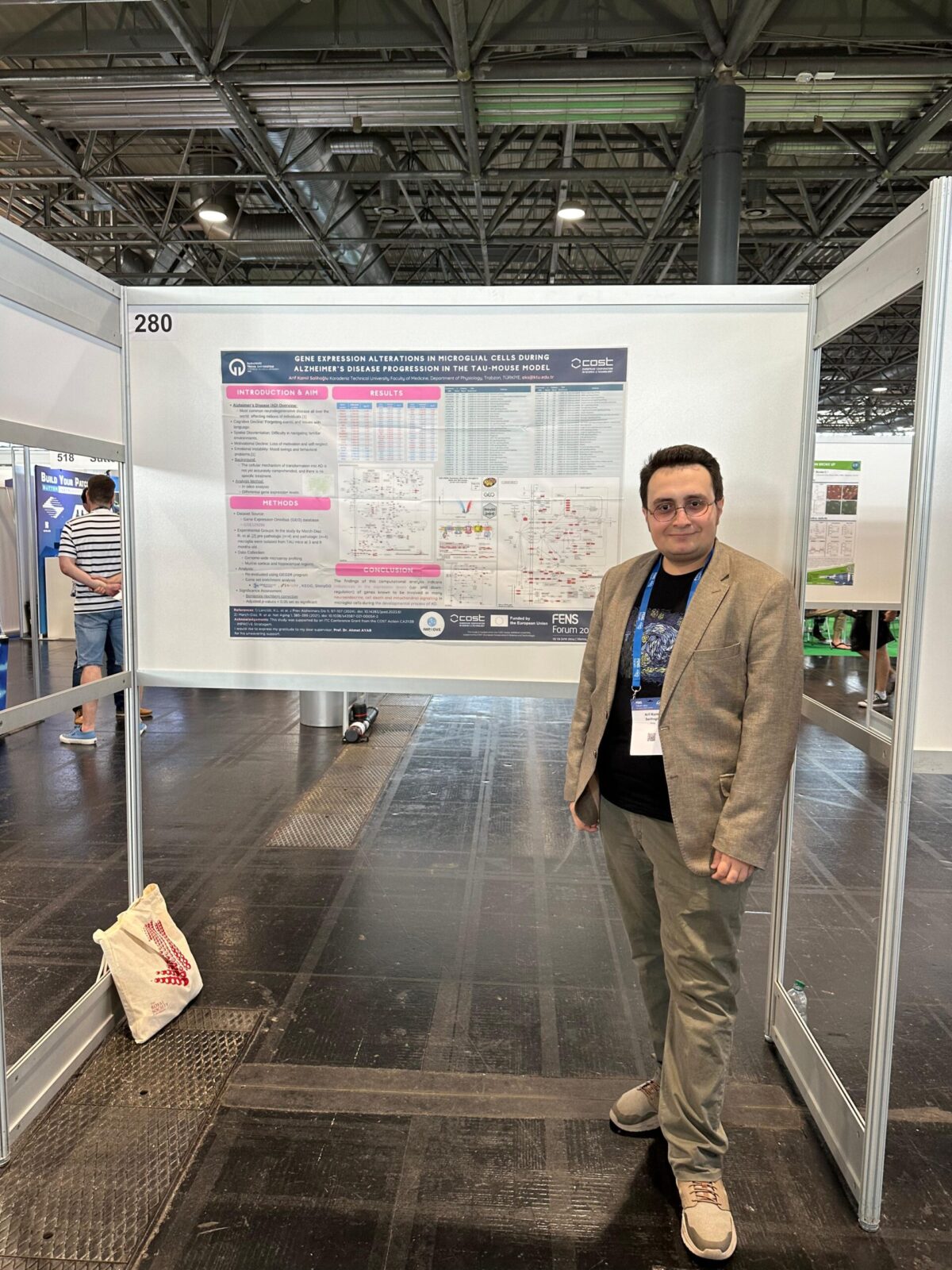
One ITC grant was successfully granted to YRI Arif Kamil Salihoglu from Turkey to attend the FENS Forum 2024, the biggest Neuroscience Conference in Europe (FENS Forum 2024 | International Neuroscience Conference), hold in Vienna, Austria from 25.-29.6.2024. He presented his work entitled "Neuroendocrine dysregulation in microglial cells during the progression of Alzheimer's disease: Prelimiary insights from gene expression analysis".
One ITC grant was successfully granted to YRI Marília Judite Falcão Torrado from Portugal to attend the 12th World Biomaterials Congress (WBC 2024, https://wbc2024.com/) in Daegu, South Korea from 26.-31.5.2024. She presented her work entitled "Let’s talk about neuroprotection! Exploring biodegradable dendrimers as delivery vectors in stroke".
Report from Marília Judite Falcão Torrado:
The World Biomaterials Congress (WBC 2024) was a very successful event, with an outstanding organization and with more than 4000 participants from all over the world. I feel very grateful for having had the chance to attend to the lectures of the world experts in the Biomaterials field, and learn about the innovative biomaterials being developed and the novel techniques used. Very entangled with the biomaterials’ world are the alternative models being established to a vast range of applications: from materials testing, to materials or techniques used in the models themselves.
Therefore, I learned a lot about this exciting ‘new’ field of research and had the opportunity to talk with some of the world experts, that gave me valuable ideas for my research. Moreover, a vast discussion was raised about animal studies, experimental design of biomaterials’ pre-clinical tests and all the regulations involved. It was also very interesting to perceive the diverse perspectives of researchers from different subjects on these topics and see the global change of interest from animal testing to the more in vitro alternative models. It is really an exciting era for this field and I believe that with all the efforts focused on this important change, we will have noticeable results in a near future.
Regarding my presentation, it was a pleasure to share my work with such a noticeable audience, that resulted in a good discussion about my results and important inputs from experts all over the world. Also, it was very pleasant to see that my work attracted very good comments from important names in my field of research, and that the audience was very interested on it. Moreover, important collaborations for my future work were established at WBC 2024, where we envisioned the development of an in vitro model that may be used for testing new brain therapies. Therefore, WBC 2024 was a very fruitful event for my work and my career and I thank you very much for helping me with this opportunity.