

Augusto Vitale and Anna Olsson jointly organized a session entitled “Do I have a choice? Reconciling personal and professional ethics in laboratory animal science training”.
Session summary:
The use of animals in research is ethically problematic, in particular through the harm that is caused to experimental animals. Much has been invested in addressing the ethical issues on a collective level (e.g. regulations, training, licensing and ethics review).
Much less attention has been given to the moral quandary of animal experimentation in the context of individual ethics. It has been left to each (future) professional in the field (graduate students, researchers, animal technicians, veterinarians) to find their own way of dealing with the ethical and emotional challenges implied in a profession where harming and killing animals is sometimes unavoidable. This can no longer be taken for granted. As teachers and mentors, we increasingly meet early career researchers in training who find themselves in a real quandary as regards their own use of animals in experiments. We argue that it is time to discuss how to best support these future professionals. We believe that the typical research community responses to trainees’ concerns (claiming that they like everyone else need to get used to the practice, or questioning if they are a good fit for the job) are problematic. We will argue that as established practitioners in the laboratory animal science community, we can play a key role in supporting a more constructive discussion about when to use animals and how to use them, hence ultimately contributing to reducing animal suffering.
This session is organized in collaboration with COST Action CA21139 3Rs concepts to improve the quality of biomedical science (IMPROVE)
Session program:
Sonja Rumpel (Germany): Psychological Stress and Strain in Laboratory Animal Professionals
Renelle McGlacken (United Kingdom): Personal Impact of Animal Use: (Tangential) Insights from an interview study with UK researchers/students
Augusto Vitale (Italy): I Am Not Sure I Want to Do It: Emotional Perspective on Animal Experiment
Anna Olsson (Portugal): Who Should Learn to Do Experiments with Animals and How?
At the FELASA 2025 Congress in Athens, the SkillUp Tech session titled “A Win-Win Situation for Research Quality and Work Satisfaction: More Involvement of Animal Care Staff” brought together professionals from across Europe to discuss the evolving role of animal care staff and technicians in laboratory animal science. The session, chaired by Fernando Gonzalez Uarquin and Paulin Jirkof, focused on the potential benefits and current challenges of increasing the involvement of these staff members in research planning and conduct. A quick on-site survey revealed that a high number of lab technicians and animal care staff participated in the session.

Survey Insights: The current situation of Communication and Involvement
Sophie Schober presented findings from a large-scale, European survey conducted under the COST Action IMPROVE initiative. The survey, which gathered responses from more than 30 countries, revealed several key points:
- Overall, researchers rated communication with other project members as good, but actual discussion about experimental planning with animal care staff occurred infrequently.
- Animal care staff and technicians expressed a clear interest in being more involved in discussions about planning and conducting experiments, as well as in receiving training on experimental planning and protocol development.
- Both researchers and non-scientific staff recognized the value of such involvement for improving research quality
The Importance of Multidirectional Communication
Bettina Bert’s presentation highlighted that while animal experiments are essential for scientific progress, questionable research practices—such as poor planning, selective reporting, and lack of transparency—can undermine both the scientific and ethical value of these studies. Open science practices like preregistration, data sharing, and comprehensive reporting have the potential to address these issues, but successful implementation depends on all participants, including technicians and care staff, understanding the importance of research rigor and transparency. Bettina also presented results from the survey, ensuring the willingness of animal care staff to be involved in scientific discussions and indicating that there is still room to enhance communication and training in these areas together with animal care staff and lab technicians.
Qualitative Assessment of Animal Welfare
Augusto Vitale’s talk addressed the role of technicians in the qualitative assessment of animal welfare, particularly in the context of non-human primate research. The presentation underscored that while objective welfare indicators are important, technicians—through their daily interactions and familiarity with individual animals—can provide valuable insights into psychological wellbeing and individual differences. Empathy and mutual trust between staff and animals were highlighted as important factors in welfare assessment. Empathy was also identified as a common and necessary requisite to carry out daily maintenance of animal colonies
Interactive Discussion and Polling
The session included interactive polls, inviting participants to reflect on their professional background, experiences with compassion fatigue, and views on the involvement of care staff and technicians in experimental planning. The responses indicated a general openness to increased inclusion, particularly when supported by appropriate training and communication structures. It was also discussed that publishers could contribute to this process Lab technicians and animal care staff should be named in the acknowledgement or they should get the possibility to publish their opinions.

The 4th Asian Congress for Alternatives to Animal Experiments (4ACAAE) and 7th Annual Meeting of the Society for Alternatives to Animal Experiments India (SAAE-I) took place in Jamia Hamdard, New Delhi, India from 12.12.-14.12.2024 (www.jamiahamdard.ac.in/4ACAAE) under the leadership of Prof. Dr. Y.J. Gupta and the Local Organizing Committee (LOC), led by Prof. Seikh Raisuddin (Organizing Secretary) supported by Prof. H.A. Khan, Prof. Suhel Parvez, Dr. Nidhi and many more wonderful people from his team.
Winfried Neuhaus was invited to the congress and gave a talk in the international session entitled “Overview about recent European 3Rs activities with a focus on 3Rs centres”, in which he took a closer look at current European developments in the 3Rs field with respect to the EC roadmap of phasing out animal studies and the response dynamics from several stakeholders, and the activities of EU3Rnet (network of European 3R centres) and the COST Action IMPROVE.


Networking event "How to organise and respond to pressure to phase out animal experimentation in neuroscience" during the FENS 2024 congress, the biggest Neuroscience congress in Europe with over 8000 participants (FENS Forum 2024 | International Neuroscience Conference), in Vienna, Austria on
A short report could be read on: https://www.linkedin.com/posts/vootele-voikar-2020_fens2024-activity-7212357642264952832-87HR?utm_source=share&utm_medium=member_desktop
Winfried Neuhaus joined the panel for discussion.

Home take messages from the report above (© Vootele Voikar):
Every scientist using animals is also a Lab Animal Scientist - these two disciplines need more dialogue and work together .
Every scientist should be ready to present and explain their work publicly.
Every scientist should use the best model available for a given question.
There is no simple messages or easy answers, communication depends also on target groups.
Only robust and rigorous science is defendable - open science, preregistration, systematic reviews etc to increase transparency and reproducibility, also for exploratory research.
Avoid polarization, opposing "us" (know) and "they" (don't know).
Thanks for organising it, hope we all learn continuously how to be better scientists, the society needs us!

Photo: Wilfried Posch
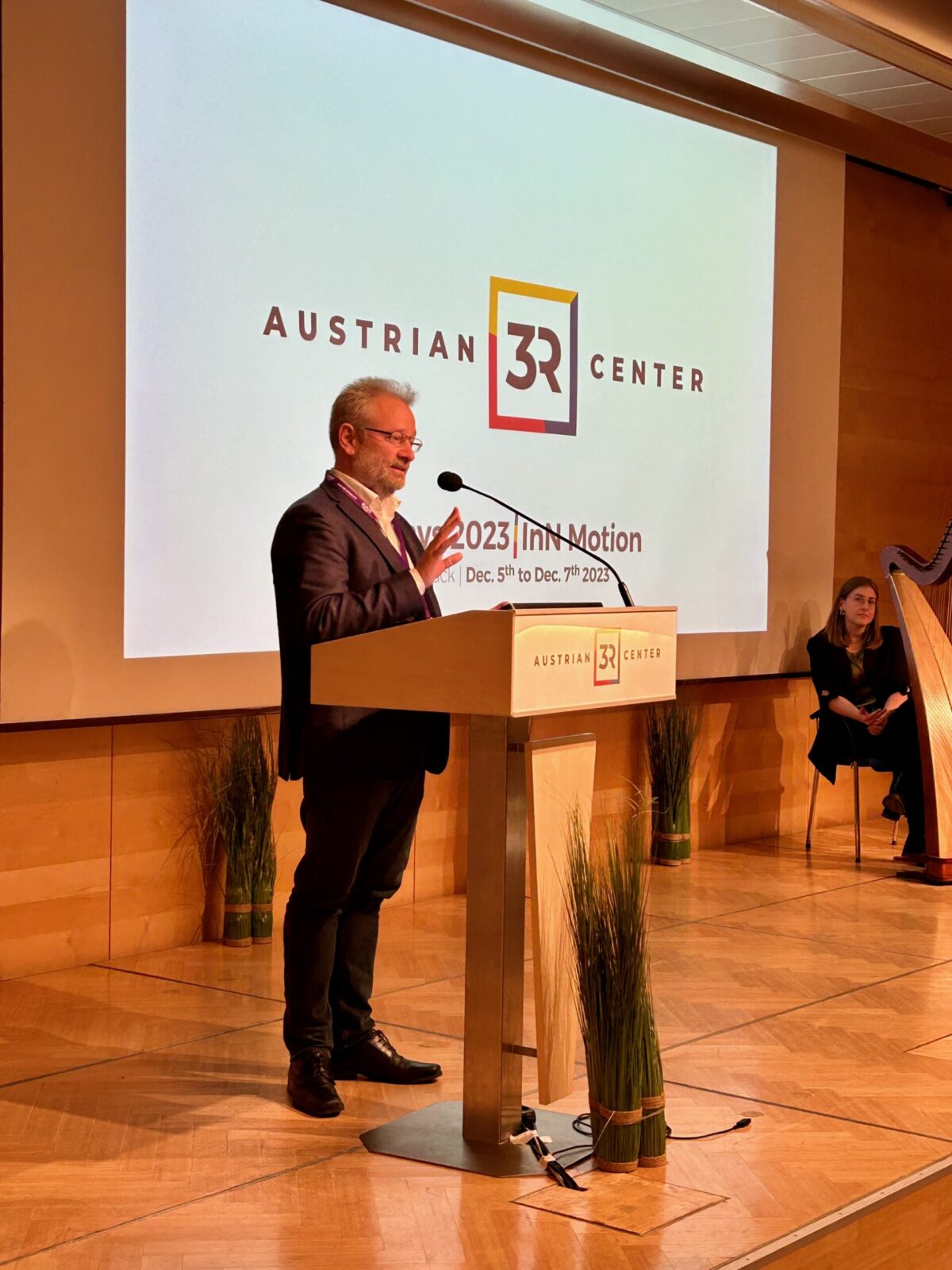
Winfried Neuhaus introduced the COST Action IMPROVE by giving a talk entitled "The COST Action Networking Activity IMPROVE" at the Austrian 3Rs Days in Innsbruck, Austria on 6.12.2023. The Austrian 3Rs Days from 5.-7.12.2023 was attended by about 200 international participants, who discussed novel methods and measures of each single R of the three 3Rs, Replacement, Reduction and Refinement of animal experiments.
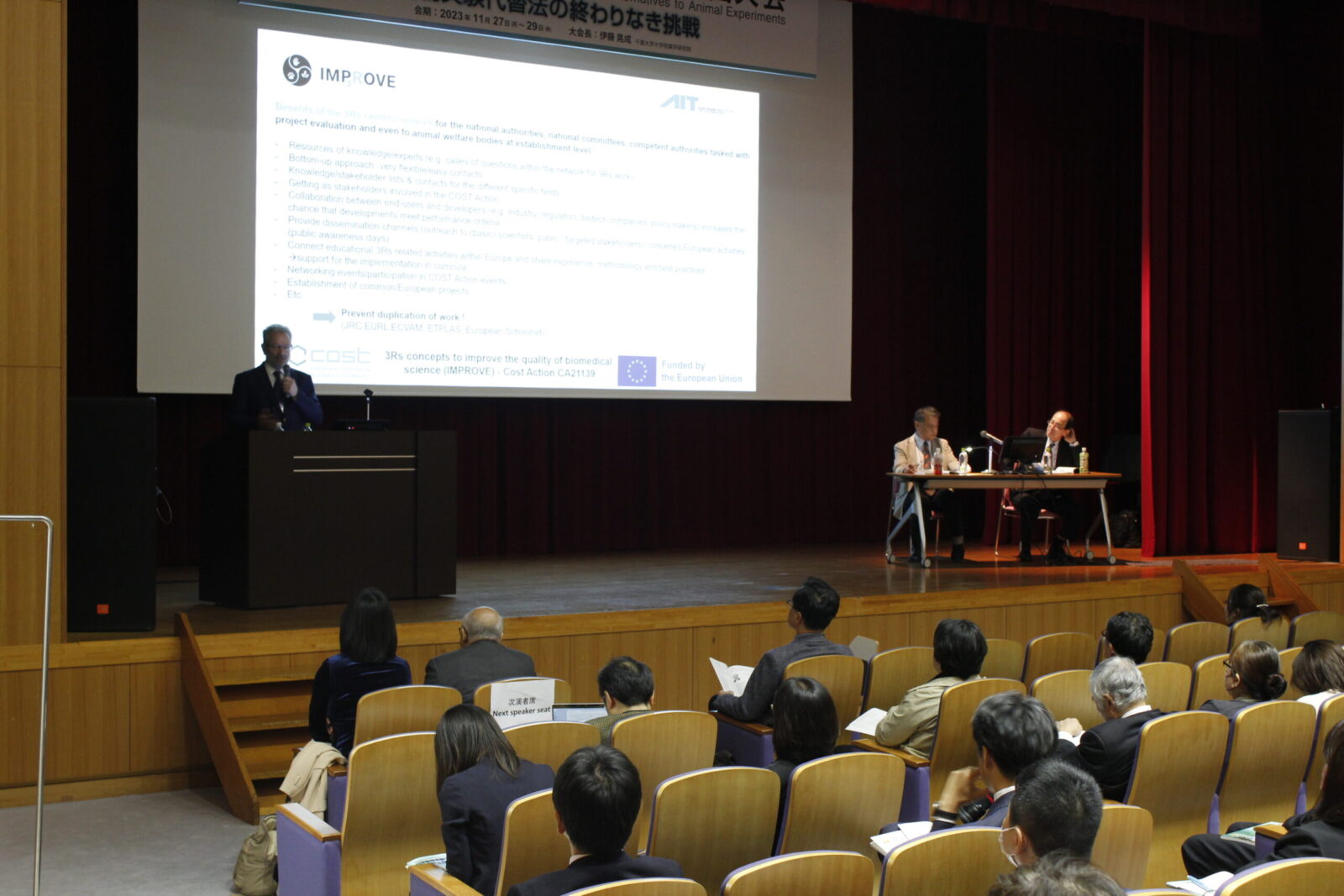
Photo: JSAAE
