

In this episode, Dr. Laura Webb from Wageningen University, the Netherlands, presented about "animal happiness - understanding and assessment through behaviour, cognition and physiology". She is co-chair of the COST Action LIFT.
This video is based upon work from COST Action AFFECT-EVO (CA23106), IMPROVE (CA21139) and LIFT (CA21124), supported by COST (European Cooperation in Science and Technology). COST is a funding agency for research and innovation networks. COST Actions help connect research initiatives across Europe and enable scientists to grow their ideas by sharing them with their peers. This boosts their research, career and innovation; www.cost.eu.
A series of webinars organized by the IMPROVE, AFFECT-EVO and LIFT COST Actions, dedicated to improving animal welfare in research and promoting the principles of the 3Rs (Replacement, Reduction, Refinement). These sessions feature leading experts discussing best practices, innovative approaches, and ethical considerations in laboratory animal science.

📍 Porto, Portugal | 🗓️ 8–10 October 2025
The IMPROVE COST Action (CA21139) successfully hosted its first Training School at i3S – Instituto de Investigação e Inovação em Saúde, bringing together educators, researchers, and trainers from across Europe to explore innovative approaches to teaching the 3Rs (Replacement, Reduction, Refinement) in animal research.
Key Outcomes:
- Pedagogical Innovation: Participants engaged in hands-on sessions focused on education science, learning how to effectively teach the 3Rs using modern, learner-centered methods.
- Ethical & Emotional Dimensions: The program emphasized the importance of addressing emotional and ethical aspects in laboratory animal science education.
- Collaborative Exchange: The hybrid format enabled broad participation, fostering international collaboration and knowledge sharing.
Impact
This Training School marked a significant step in building a community of educators committed to improving research quality and animal welfare through education. It laid the groundwork for future initiatives and collaborations within the IMPROVE network.
🔗 For more details and resources, visit: https://cost-improve.eu/outcomes/


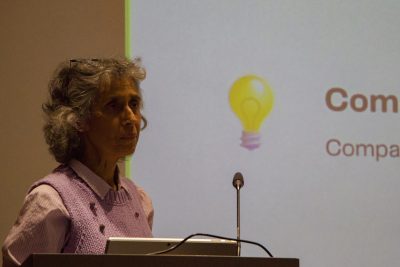


Genova, 23rd September 2025 - The COST Action IMPROVE successfully held its next 3Rs centres Workshop at the Università degli Studi di Genova, Dipartimento Architettura e Design (DAD), gathering leading researchers and stakeholders from across Europe.
Over two days from 17th to 18th of September, participants engaged in collaborative sessions focused on the 3Rs (Replacement, Reduction, and Refinement) and the role and future activities within the 3Rs centre network EU3Rnet.
The workshop opened with remarks from Arti Ahluwalia and Winfried Neuhaus, followed by updates on the Memorandum of Understanding and the Balkan Regional 3R Centre.
Attendees took part in discussions on communication, funding, and sustainability, and enjoyed valuable networking opportunities, including a group dinner in the heart of Genova. The second day featured sessions on the organisation and management of EU3Rnet, short pitches on emerging topics, and the formation of new working groups to address key challenges in the field.
The hybrid format allowed both in-person (about 40) and online participation, ensuring broad engagement and collaboration.
This event was held together with the Next Gen3Ration Research meeting of the Italian 3R centre (Centro 3R; https://www.centro3r.it/it/events/next-gen3ration-research) from 18th to 19th of September.
A heartfelt thank you to the organisers of this remarkable event - Elena Grasselli and her team !

In this episode, Prof. Georgia Mason presents about proxy measures for animal feelings: how to validate indicators of affective state or cumulative affective experience.
This video is based upon work from COST Action AFFECT-EVO (CA23106), IMPROVE (CA21139) and LIFT (CA21124), supported by COST (European Cooperation in Science and Technology). COST is a funding agency for research and innovation networks. COST Actions help connect research initiatives across Europe and enable scientists to grow their ideas by sharing them with their peers. This boosts their research, career and innovation; www.cost.eu.
A series of webinars organized by the IMPROVE, AFFECT-EVO and LIFT COST Actions, dedicated to improving animal welfare in research and promoting the principles of the 3Rs (Replacement, Reduction, Refinement). These sessions feature leading experts discussing best practices, innovative approaches, and ethical considerations in laboratory animal science.


Augusto Vitale and Anna Olsson jointly organized a session entitled “Do I have a choice? Reconciling personal and professional ethics in laboratory animal science training”.
Session summary:
The use of animals in research is ethically problematic, in particular through the harm that is caused to experimental animals. Much has been invested in addressing the ethical issues on a collective level (e.g. regulations, training, licensing and ethics review).
Much less attention has been given to the moral quandary of animal experimentation in the context of individual ethics. It has been left to each (future) professional in the field (graduate students, researchers, animal technicians, veterinarians) to find their own way of dealing with the ethical and emotional challenges implied in a profession where harming and killing animals is sometimes unavoidable. This can no longer be taken for granted. As teachers and mentors, we increasingly meet early career researchers in training who find themselves in a real quandary as regards their own use of animals in experiments. We argue that it is time to discuss how to best support these future professionals. We believe that the typical research community responses to trainees’ concerns (claiming that they like everyone else need to get used to the practice, or questioning if they are a good fit for the job) are problematic. We will argue that as established practitioners in the laboratory animal science community, we can play a key role in supporting a more constructive discussion about when to use animals and how to use them, hence ultimately contributing to reducing animal suffering.
This session is organized in collaboration with COST Action CA21139 3Rs concepts to improve the quality of biomedical science (IMPROVE)
Session program:
Sonja Rumpel (Germany): Psychological Stress and Strain in Laboratory Animal Professionals
Renelle McGlacken (United Kingdom): Personal Impact of Animal Use: (Tangential) Insights from an interview study with UK researchers/students
Augusto Vitale (Italy): I Am Not Sure I Want to Do It: Emotional Perspective on Animal Experiment
Anna Olsson (Portugal): Who Should Learn to Do Experiments with Animals and How?
In this episode, Dr Tom Smulders presents on: "Adult hippocampal neurogenesis as a valence marker". Tom Smulders is Chair of COST Action AFFECT-EVO https://affect-evo.eu/.
This video is based upon work from COST Action AFFECT-EVO (CA23106), IMPROVE (CA21139) and LIFT (CA21124), supported by COST (European Cooperation in Science and Technology). COST is a funding agency for research and innovation networks. COST Actions help connect research initiatives across Europe and enable scientists to grow their ideas by sharing them with their peers. This boosts their research, career and innovation; www.cost.eu.
A series of webinars organized by the IMPROVE, AFFECT-EVO and LIFT COST Actions, dedicated to improving animal welfare in research and promoting the principles of the 3Rs (Replacement, Reduction, Refinement). These sessions feature leading experts discussing best practices, innovative approaches, and ethical considerations in laboratory animal science.


Thanks to dissemination conference grants under Cost Action IMPROVE Arti Ahluwalia and Winfried Neuhaus attended the 12th World Congress on Alternatives and Animal Use in the Life Sciences (WC12) from August 27-31, 2023.
Arti Ahluwalia presented two lectures, one in the Symposium “Future of Multi-Scale Modelling and Simulation in Disease and Toxicology” (Title of the talk: Lab on a laptop: beyond the experimental model) and one in the Symposium “Implementing the 3Rs in Education under the theme Next-Gen Education” (Title of the talk: Centro 3R, mainstreaming replacement through pervasive 3R education). The first presentation described some of the virtual models developed in her lab. During her talk she put forward the proposal that in vitro models might be replaced by the “lab on a laptop”. Following the symposium, she was involved in engaging discussions on the value of in-silico models, analysing why they are not widely used and how to render them accessible to enable the implementation of viable and valid alternatives to animal experiments. This is a central theme in IMPROVE. In the second presentation she described the state of knowledge on the 3Rs at Italian universities before and after the Italian Centro 3R’s (www.centr3r.it) campaign of pervasive education at all levels. The results showed how education significantly increases the application of the 3Rs and promotes responsible research linked to WG4 Education of our COST Action.

Winfried Neuhaus gave a talk in the session "A World of 3Rs Centres: Unity in Diversity" entitled "The Rise of European 3Rs centres and their network EU3Rnet" focusing on the promotion of the COST Action IMPROVE as an outcome of the collaboration of the European 3R centres.
The WC12 congress was a dynamic and variegated event, providing a great opportunity to discuss the future of the 3Rs with scientists from all over the world, network with young researchers and leaders in the field, and to showcase Europe’s leadership in this area.